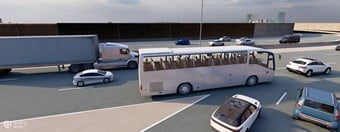
If you’re looking for a new set of opportunities for your driving career, becoming fully licensed with a passenger endorsement is a great path to take. Spanning Newark, Jersey City, Trenton, Atlantic City, Camden, Princeton, and the Jersey Shore, the Garden State offers lots of job opportunities for CDL drivers with this endorsement. Major airport terminals, commuter hubs, charter routes, church outings, school transportation, senior transportation, paratransit services, and tourism destinations are just some of the settings where your skills and licensing are needed. You’ll need a Passenger "P" endorsement to drive a commercial motor vehicle (CMV) designed to transport 16 or more people, including yourself. One requirement for the P endorsement is passing the New Jersey MVC Passenger Transport Test (with its primary study material found in the state CDL manual). If you have already started digging into that material, you may feel overwhelmed by its volume and the testing expectations. To pass the official exam, you must obtain a minimum score of 80%. This hurdle is precisely why our content experts have designed our AI-powered New Jersey MVC CDL Passenger Endorsement Practice Tests that take the guesswork out of what you need to study. Our practice tests mirror both the structure and word style of the official exam and help ensure you pass on your first attempt. Once you’ve aced this practice test, try another: https://driving-tests.org/new-jersey/nj-cdl-passenger-vehicles-practice-test/.
You must also pass a Skills Test in the class of passenger vehicle you plan to operate (if you have not already done so). Additionally, you must pass the separate Air Brakes Knowledge Test (and a Skills Test in an air brake-equipped vehicle) if the CMV you plan to drive has air brakes, including air over hydraulic brakes. Our interactive New Jersey MVC CDL Air Brakes Practice Tests can help you meet this requirement as well: https://driving-tests.org/new-jersey/nj-cdl-air-brake-practice-test/.
The bulk of the P Endorsement Exam covers pre-trip and post-shift inspections, where you are expected to know how to inspect the service brakes, parking brake, steering mechanism, lights, reflectors, tires, horn, windshield wipers, mirrors, wheels, rims, coupling devices, and emergency equipment. You must also inspect the inside of the bus, with all its passenger safety equipment and emergency exits. You’ll need to know how to load and unload passengers safely, manage baggage, follow hazardous materials restrictions, and manage passengers. The material is substantial, but our state-specific practice tests are here to guide you along the way. Get started today.