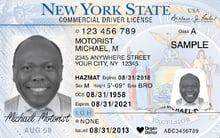
NY State sees increasing demand for tanker drivers in 2026. With the right qualifications, you will find plenty of job opportunities available. The energy and fuel distribution sector is the dominant employer of tanker drivers in the Empire State. As a tanker driver, you’ll often haul fuel, propane, and home heating oil in areas like Long Island and the Hudson Valley.
You will need a Class A or Class B CDL (Commercial Driver’s License) with a Tank Vehicles (N) endorsement to legally operate commercial vehicles designed to transport liquid or gaseous materials in one or more tanks, with each tank having an individual rated capacity of more than 119 gallons and an aggregate rated capacity of 1,000 gallons or more. To qualify, you must have a driver’s license, be at least 18 years old, and pass a vision screening and a medical exam. Since February 2022, federal law has required Entry-Level Driver Training (ELDT) for all aspiring commercial drivers in the United States. You must complete this training from a provider listed in FMCSA’s Training Provider Registry (TPR).
During the licensing process, you will undergo knowledge and skills testing. The official general knowledge test is the first written exam you will take. It consists of 50 multiple-choice questions based on the official Commercial Driver’s Manual (New York CDL Handbook 2026). You must score 80% or higher to pass. Train with our Free New York CDL Permit Practice Test several weeks before exam day to increase your chances of achieving a passing score on your first attempt.
You must also pass the official tanker vehicles knowledge exam, which includes 20 questions based on Section 8 (Tank Vehicles) of the official commercial driver’s manual. The practice test that you’re about to take is our second New York CDL Tanker Vehicles Practice Test. It includes several features that allow you to customize your testing experience, as well as an automated assistant. You will receive hints, real-life examples, detailed explanations, and immediate feedback.
Train with our practice tests as often as your schedule allows and watch your knowledge naturally improve over time. Consistency and perseverance are keys during your learning phase. During this time, you build the foundation for your driving skills, so it is crucial to avoid rushing.