You must be at least 18 and hold a valid driver’s license to become a commercial driver in the Keystone State. However, you must be 21 or older to drive across state lines, carry passengers, or transport hazardous materials. If you are interested in driving tankers, you should get a Class A or Class B CDL (Commercial Driver’s License) along with the Tank Vehicles (N) endorsement. The licensing process begins with passing a vision screening, passing a medical screening, scoring 80% or higher on the official general knowledge exam, submitting identification documents, and paying the licensing fees.
Our Free Pennsylvania CDL Permit Practice Test will teach you general commercial driving theory, a subject you should master before you get behind the wheel of any commercial vehicle. Within a few weeks of consistent training, you will naturally build the knowledge and confidence to ace this exam on your first attempt.
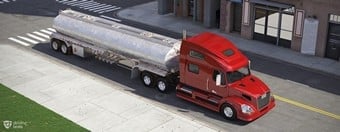
You’ll need the N endorsement to operate commercial vehicles designed to transport liquid or gaseous materials in one or more tanks, with each tank having an individual rated capacity of more than 119 gallons and an aggregate rated capacity of 1,000 gallons or more. The official Tank Vehicles knowledge exam will evaluate your understanding of liquid cargo handling, emergency procedures, and pre-trip inspections specific to tanker vehicles. A minimum score of 80% is required to pass, leaving little room for error. To help you achieve a passing score on your first attempt, we provide an efficient solution to your study needs.
Our Pennsylvania CDL Tanker Vehicles Practice Tests can make it easier for you to understand this subject. 18 users are currently training with this practice test, which is the second in this series. Start your training today and build a strong foundation for your driving skills with this tool.
We recommend dedicating several weeks to your learning phase. During this time, you will learn general commercial driving theory from the official Commercial Driver’s Manual (Pennsylvania CDL Handbook 2026). This comprehensive resource should not be missing from your toolkit. You can use it alongside our practice tests to boost your learning potential.