In the United States, there are three classes of Commercial Driver Licenses (CDLs). A Class A CDL is typically for operating heavy combination vehicles, such as semi-trucks and tractor-trailers. A Class B CDL is typically for operating large single-unit vehicles, including large buses, box trucks, and most dump trucks. A Class C CDL is typically for operating smaller commercial vehicles that transport hazardous materials or at least 16 occupants (including the driver), such as small buses (including shuttle buses) or small trucks carrying hazardous materials.
To obtain a CDL of any class, you must meet a series of requirements. Notably, you must pass a medical examination and a General Knowledge test on commercial driving theory to obtain a Commercial Learner’s Permit (CLP). With a CLP, you can practice commercial driving under supervision until you become good enough at it to pass the official skills test, which includes basic vehicle maneuvers, a pre-trip inspection test, and a road test. Passing the skills test is a necessary and huge step toward obtaining a CDL.
However, depending on which class of CDL you’re applying for and which types of vehicles you plan to drive, you may have to pass certain additional knowledge tests. To be allowed to drive combination vehicles, you must pass the Combination Vehicles knowledge test.
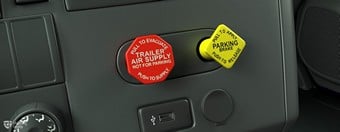
This free South Carolina CDL Combination practice test is based on the official CDL manual (South Carolina CDL Handbook 2026), just like the official knowledge test. It’s up to date as of May 2026. There are 20 multiple-choice practice questions and answers on such topics as combination braking systems, combination driving techniques, coupling and uncoupling, and pre-trip inspections. Each question comes with an available hint to nudge you toward the correct answer, and an explanation of the correct answer. You can also ask our automated assistant for even more help. What this test doesn’t come with is a time limit. Take your time and learn the material addressed by this practice test.
Once you obtain a CDL of the appropriate class and the endorsements you need for the vehicles and cargoes you plan to drive, the world of commercial driving will open up for you. South Carolina’s agriculture, timber, and manufacturing industries rely on truckers to transport their products, often exported from the state. In addition, the Port of Charleston is one of the busiest container seaports on the East Coast. There are many kinds of truck operations there: dray (short distance), over-the-road (long distance), container transport, hazardous materials transport, and overdimensional (oversize) transport. Seaports, like airports, have secure areas. You may need to obtain a Transportation Worker Identification Credential (TWIC) card.