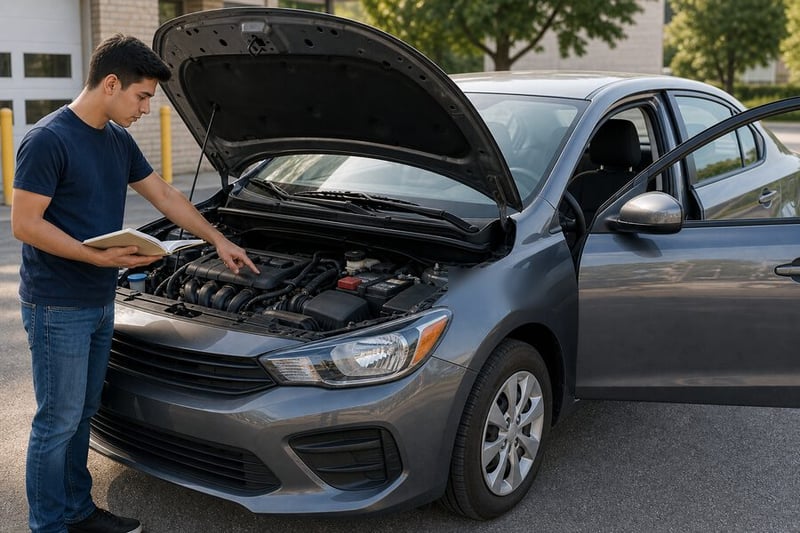
Discover the secrets of your car with our comprehensive guide on vehicle components. Explore engine mechanics, safety features, and more, learning about what is under the hood, inside the cabin, and beyond.
Familiarizing yourself with your vehicle is the first step in becoming a confident driver. This guide will introduce you to the car’s anatomy, various parts, and explain their functions.
Key Car Anatomy Components
Let’s break down your vehicle’s parts into categories. Short descriptions are provided for an overview, and more detailed articles are just a click away for a deeper dive.
Covers the car’s outer parts that are visible and frequently interacted with, such as tires, doors, and lights.
Tires
Tires are your sole contact with the road, playing a pivotal role in safety, handling, and fuel efficiency. They require regular checks for air pressure, tread depth, and overall condition to ensure optimal performance and safety.
Lights
Your vehicle’s lights—including headlights, taillights, brake lights, and turn signals—are crucial for visibility and communication with other drivers. They must be operational at all times for safe driving.
Windshield and Wipers
The windshield provides visibility while protecting occupants from the elements. Windshield wipers maintain clear vision during adverse weather conditions. Regular maintenance helps ensure visibility and safety.
Mirrors
Side mirrors and the rearview mirror give you a view of the environment around the car, which is essential for safe maneuvering and lane changes.
Doors and Locks
Doors provide access to the vehicle’s cabin, and their locks secure it. Proper functioning is essential for safety and security.
Body and Paint
The car’s body should be kept free of rust and damage, while the paint not only contributes to the vehicle’s appearance but also protects against corrosion.
Exhaust System
The exhaust system routes gases away from the engine and passenger cabin, reduces engine noise, and helps maintain fuel efficiency.
Bumpers
Bumpers are designed to absorb impact in the event of a collision, minimizing damage to the car’s body and occupants.
The interior features that directly affect your driving experience, like the steering wheel, dashboard, and seating.
Steering Wheel
The steering wheel is your primary tool for directing the vehicle. It may also house controls for the horn, headlights, and cruise control. Proper hand positioning and steering technique are crucial for safe driving.
Dashboard
The dashboard contains the instrument cluster, including speedometer, fuel gauge, and warning lights, as well as other control systems like the infotainment center and climate control.
Pedals
The pedals control the car’s acceleration, braking, and in manual vehicles, clutch operation. Understanding the correct use of each pedal is fundamental to driving.
Seats and Seat Adjustment
Properly adjusted seats are key to driver comfort and control. This includes adjustments for height, distance from the steering wheel, and backrest angle.
Seat Belts
Seat belts are a critical safety feature. Learn how to properly wear them and understand their role in protecting passengers.
Mirrors
The interior rearview mirror, along with side mirrors, provide the driver with a view around and behind the vehicle. Proper adjustment is key for optimal visibility.
Controls and Switches
Learn about the various controls and switches located on the dashboard and center console, including lights, windshield wipers, and emergency flashers.
Infotainment and Navigation Systems
Modern cars often include infotainment systems that can control music, provide navigation, and connect to your smartphone.
Understand the mechanical heart of your vehicle, including the engine, battery, and more.
Engine
The engine is the powerhouse of your vehicle, converting fuel into motion. It’s a complex assembly that requires regular maintenance for optimal performance.
Battery
The battery supplies electrical power to start the engine and runs the electrical systems when the engine is off. It’s vital to keep it in good working condition.
Cooling System
This system prevents the engine from overheating by circulating coolant. It includes the radiator, thermostat, and water pump.
Oil and Lubrication System
Engine oil lubricates moving parts, reduces friction, and helps keep the engine clean. Regular oil changes are crucial for engine health.
Transmission
The transmission is responsible for transferring power from the engine to the wheels. It adjusts the gear ratio between the engine and the wheels.
Brakes
The brake system is one of the most critical safety features. It includes brake pads, rotors, calipers, and the brake fluid system.
Fuel System
This system stores and delivers fuel to the engine. Components include the fuel tank, pump, filter, and injectors.
Electrical System
Apart from the battery, the electrical system includes the alternator, starter, and an array of sensors and electronic control units.
Safety should always be a priority. Learn about the features designed to protect you.
Airbags
Airbags are a critical safety feature, designed to deploy in milliseconds during a collision to protect occupants from serious injury. They work in conjunction with seat belts to provide comprehensive protection.
Seat Belts
Seat belts are the first line of defense in an accident. They keep occupants securely in place, reducing the risk of injury or death in collisions.
Anti-lock Braking System (ABS)
ABS prevents the wheels from locking up during braking, allowing the driver to maintain steering control during an emergency stop, reducing the risk of skidding.
Electronic Stability Control (ESC)
ESC helps to stabilize the vehicle during cornering and avoids skidding or sliding, especially in slippery conditions.
Traction Control System
This system helps prevent wheel spin during acceleration by reducing engine power or applying brakes to specific wheels, offering better stability.
Crumple Zones
Crumple zones are areas in a vehicle designed to absorb and dissipate energy during a crash, reducing the force transmitted to occupants.
Child Safety Features
These include car seats, booster seats, and child locks, all designed to keep younger passengers safe.
Backup Camera and Parking Sensors
These features aid in reversing and parking maneuvers, helping to prevent accidents by increasing visibility and alerting drivers to obstacles.
Table
For a quick reference to various parts of your vehicle and their functions, consult the table below.
| Component | Location | Function |
|---|---|---|
| Engine | Under the hood | Powers the vehicle |
| Battery | Under the hood | Provides electricity to start the engine and power systems |
| Tires | Exterior | Provide traction and absorb shock |
| Brakes | Wheel area | Slow down or stop the vehicle |
| Headlights | Front exterior | Illuminate the road and signal presence to others |
| Taillights | Rear exterior | Indicate when the vehicle is braking or turning |
| Steering Wheel | Interior | Maneuver the vehicle directionally |
| Transmission | Interior/Under the hood | Manages engine power and wheel speed |
| Rearview Mirror | Interior | Provides a view behind the vehicle |
| Air Conditioning | Interior | Regulates temperature and air flow within the cabin |
Take the time to sit in your parked vehicle and familiarize yourself with all the controls. Practice turning on and off your lights, using turn signals, and adjusting your mirrors even before you start driving.
This article is a part of our "Driving Basics" series. To learn more about driving maneuvers, road positioning, and other essential skills, check out our other articles.
Free DMV Practice Tests
- Alabama
- Alaska
- Arizona
- Arkansas
- California
- Colorado
- Connecticut
- Delaware
- District of Columbia
- Florida
- Georgia
- Hawaii
- Idaho
- Illinois
- Indiana
- Iowa
- Kansas
- Kentucky
- Louisiana
- Maine
- Maryland
- Massachusetts
- Michigan
- Minnesota
- Mississippi
- Missouri
- Montana
- Nebraska
- Nevada
- New Hampshire
- New Jersey
- New Mexico
- New York
- North Carolina
- North Dakota
- Ohio
- Oklahoma
- Oregon
- Pennsylvania
- Rhode Island
- South Carolina
- South Dakota
- Tennessee
- Texas
- Utah
- Vermont
- Virginia
- Washington
- West Virginia
- Wisconsin
- Wyoming