This guide is your straightforward path to getting your driver’s license. From the first steps of learning about your eligibility to mastering the details for the road test, we’ve got you covered. We’ll help you understand what you need, what to expect, and how to prepare for each stage. Let’s get you on the road.
Quick Facts
Eligibility
To apply for a U.S. driver’s license, you must meet the age requirement, which typically starts at 16 years for a learner’s permit (find the age for your state here).Provide proof of identity, legal presence in the country, and residency in thestate where you are applying.
Application Process
The path to your driver’s license includes passing a written knowledge exam and a granted a learner’s permit. Eventually, you’ll need to pass a road test to obtain your official driver’s license.
Fees
Costs vary by state but generally include fees for the application, knowledge exam, road test, and the license itself.
Testing Locations
Written and driving tests are conducted at state-run DMV offices or authorized testing centers. Find your nearest DMV office.
Documents to Bring on Test Day
Bring identification, proof of residency, your learner’s permit, and if applicable, a vehicle for the driving test along with proof of insurance and registration.
1. Understanding the Process
For teens, the road to licensure starts with a learner’s permit, which typically involves proving your age and identity, parental consent, and a written exam. This is the first step towards mastering the rules of the road and turn signals. Need more info? Visit the Learner’s Permit page.
Prepare for Written Test
Start by studying the driver’s manual and taking practice quizzes. Familiarize yourself with all the road rules, signs, and signals.
Pass Written Test and Receive Learner's Permit
Once you’re ready, take and pass the written knowledge test to receive your learner’s permit. Learn how many questions there are on the permit test in your state.
Prepare for Road Test
With your permit, accumulate driving experience under supervision, honing your skills for various driving conditions and maneuvers. When you’re set, it’s time to take the road test. For a deep dive into preparing for your road test, check out the Road Test page.
Pass Road Test and Receive Driver's License
Schedule and pass the road test to demonstrate your driving competence. Successful completion earns you a full driver’s license.
Adults can directly apply for a driver’s license, though a written knowledge test is still a mandatory step before taking the road test.
Study for Written Test
Adults should begin by thoroughly studying the driver’s manual and taking multiple practice tests to ensure a solid understanding of road rules.
Pass Written Test
Visit your local DMV to take the written knowledge test. Passing this test is crucial to proceed in the licensing process.
Prepare for Road Test
Practice driving to gain experience behind the wheel. If new to driving, consider professional driving lessons for hands-on learning.
Pass Road Test and Receive Driver's License
After adequate practice, take the road test to demonstrate your driving skills. Passing this will earn you a full driver’s license.
Senior learners may have additional checks, like an eye exam, to ensure road safety. Wisdom on the road comes with experience and attention to health and changes in perception.
The requirements for senior citizens regarding road tests and knowledge tests vary by state. There is no one-size-fits-all answer, as each state has its own rules for driver’s license renewals for senior citizens.
Health and Vision Check
Senior learners may start with a health and vision exam to ensure it’s safe to drive. Good vision is critical for road safety.
Prepare for Written Test
Revisit the driver’s manual to refresh your knowledge. Rules may have changed, and it’s important to be up-to-date with current driving laws and regulations. Take practice tests to prepare for the written knowledge test. Use resources aimed at refreshing your driving theory.
Pass Written Test
Visit your local DMV to take the written knowledge test. Passing this test is crucial to proceed in the licensing process.
Prepare for Road Test (if Required)
If road test is required by your state, spend some time practicing your driving, focusing on areas that might need more attention as you age, such as reaction time and night driving. For a deep dive into preparing for your road test, check out the Road Test page.
Pass Road Test (if Required)
When you feel confident, take the road test. Your experience, coupled with recent practice, will help you succeed.
Jump to your state’s guide
Find your state below for a detailed state-specific guide on obtaining your driver’s license:
| State | Guide Link |
|---|---|
| Alabama | Alabama Guide |
| Alaska | Alaska Guide |
| Arizona | Arizona Guide |
| Arkansas | Arkansas Guide |
| California | California Guide |
| Colorado | Colorado Guide |
| Connecticut | Connecticut Guide |
| Delaware | Delaware Guide |
| Florida | Florida Guide |
| Georgia | Georgia Guide |
| Hawaii | Hawaii Guide |
| Idaho | Idaho Guide |
| Illinois | Illinois Guide |
| Indiana | Indiana Guide |
| Iowa | Iowa Guide |
| Kansas | Kansas Guide |
| Kentucky | Kentucky Guide |
| Louisiana | Louisiana Guide |
| Maine | Maine Guide |
| Maryland | Maryland Guide |
| Massachusetts | Massachusetts Guide |
| Massachusetts | Massachusetts Guide |
| Michigan | Michigan Guide |
| Minnesota | Minnesota Guide |
| Mississippi | Mississippi Guide |
| Missouri | Missouri Guide |
| Montana | Montana Guide |
| Nebraska | Nebraska Guide |
| Nevada | Nevada Guide |
| New Hampshire | New Hampshire Guide |
| New Jersey | New Jersey Guide |
| New Mexico | New Mexico Guide |
| New York | New York Guide |
| North Carolina | North Carolina Guide |
| North Dakota | North Dakota Guide |
| Ohio | Ohio Guide |
| Oklahoma | Oklahoma Guide |
| Oregon | Oregon Guide |
| Pennsylvania | Pennsylvania Guide |
| Rhode Island | Rhode Island Guide |
| South Carolina | South Carolina Guide (coming soon) |
| South Dakota | South Dakota Guide (coming soon) |
| Tennessee | Tennessee Guide (coming soon) |
| Texas | Texas Guide |
| Utah | Utah Guide (coming soon) |
| Vermont | Vermont Guide (coming soon) |
| Virginia | Virginia Guide (coming soon) |
| Washington | Washington Guide (coming soon) |
| West Virginia | West Virginia Guide (coming soon) |
| Wisconsin | Wisconsin Guide (coming soon) |
| Wyoming | Wyoming Guide (coming soon) |
Master the essentials for your DMV test—study less, remember more.
From ignition to navigation—get savvy with the driving fundamentals.
Learn the rules that keep the roads safe.
Decode the language of the road—signs and signals made simple.
2. Written Test (aka Knowledge Exam)
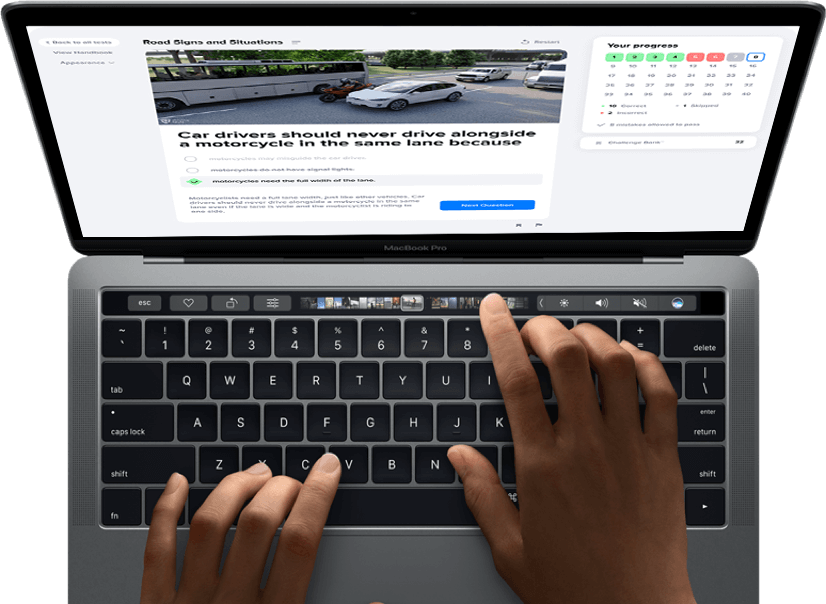
The driver’s knowledge exam tests your understanding of road signs, rules, and driving etiquette. It’s essential to read the driver’s manual and take practice tests. When you’re ready, approach the exam confidently, armed with the knowledge that you’ve prepared thoroughly.
Nowadays, the knowledge exam is often conducted on a computer. This allows for a more interactive and dynamic testing experience. Results are typically available immediately after completion, streamlining the process and getting you one step closer to the road.
Understanding Test Format
The knowledge exam typically consists of multiple-choice questions. Familiarize yourself with the format beforehand to ensure no surprises on test day. This could include understanding the number of questions, passing score, and time limits.
How to Prepare
Your best allies are the official driver’s manual and online practice tests. They cover all possible topics, and repetition is key. Check out this Driver’s Knowledge Test Guide for more information.
Looking for a reliable way to prep for your DMV written test? Tap into a wealth of resources and practice exams to help you hit the ground running.
Consider downloading this free last-minute checklist to know what to do before your driver’s exam.
During the Exam
Test-taking tip: Read every question carefully. Watch out for details that could change the answer, and remember to manage your time so you can review your responses if needed.
Frequently Missed Questions
Be cautious with questions framed negatively or with words like "except" and "not." These can be tricky and are designed to ensure you understand what’s being asked fully. It’s easy to miss the details in these questions, so take your time and read each one carefully.
Pay extra attention to questions about blood alcohol levels, right-of-way rules, and road sign meanings—areas where mistakes are often made.
What to Do If You Fail
It’s not the end of the road. Review the areas where you struggled, and when you feel ready, you can typically retake the exam. Check with your local DMV for specific retake policies.
3. Road Test
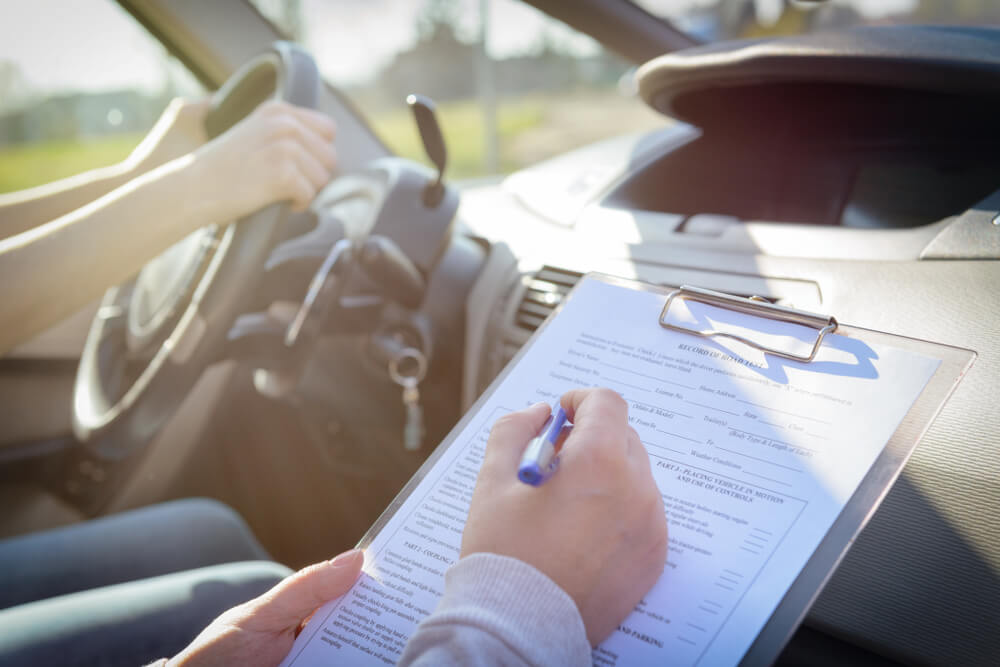
Before taking the road test, ensure you’ve clocked sufficient practice hours, ideally in various driving conditions. It’s the real-world application of what you’ve studied. Check out our Driving Basics section to learn more about the essentials of safe driving.
Vehicle Requirements
The car you use for the test should be roadworthy: all signals, lights, and brakes must be in working order. Also, make sure you have valid registration and insurance for the vehicle.
Common mistakes
Nervousness can lead to errors like not checking mirrors, incorrect signaling, or inadequate speed control. Practice these to avoid typical slip-ups.
What to Do If You Fail
Take it as a learning experience. Review the examiner’s feedback, practice accordingly, and reschedule the test when you feel confident in your improvements.
4. On the Road
Congratulations on earning your license! It’s more than just a piece of plastic—it’s your ticket to the open road. Remember, real-world driving is an ongoing learning experience.
Practical Tps
Practice makes perfect. Stay observant, keep a safe following distance, and always signal your intentions. It’s the small habits that make a big difference in safety.
Stay alert, drive safe. Anticipate and avoid hazards on the road.
Expert maneuvering techniques for every situation.
Embrace technology for smarter driving—navigate with confidence.
Drive green, save more. Eco-conscious driving that helps the planet and your wallet.
Understanding Road Signs and Rules
Keep refreshing your knowledge of road signs and rules. They’re not just suggestions—they’re the law.
Safe Driving Practices
Drive defensively, not aggressively. Keep distractions to a minimum, and never underestimate the importance of a good night’s sleep before driving.
Keep your vehicle running smoothly with our routine maintenance schedule and tips.
Solve common car troubles yourself with handy DIY repair guides.
5. Maintaining Your License
Keeping your driver’s license valid is like running a marathon—pacing and attention to detail go a long way. Stay on top of renewal deadlines; it’s easier than scrambling to fix an expired license.
Renewal Process
Check your license for the expiration date and renew before it arrives. Most states allow online renewals, saving you a trip to the DMV.
Jump to your state’s guide
Find your state below for detailed state-specific guide on renewing your driver’s license:
Change of Address Procedures
Moved recently? Update your address with the DMV to ensure you receive all communication. This is often required by law within a certain timeframe after moving.
Dealing with Traffic Violations
If you’ve received a citation, handle it promptly. Unaddressed violations can spiral into bigger issues, like suspended licenses.
Reinstatement after Suspension
Should your license be suspended, follow the state’s protocol for reinstatement, which may include fees, courses, or a waiting period.
Free DMV Practice Tests
- Alabama
- Alaska
- Arizona
- Arkansas
- California
- Colorado
- Connecticut
- Delaware
- District of Columbia
- Florida
- Georgia
- Hawaii
- Idaho
- Illinois
- Indiana
- Iowa
- Kansas
- Kentucky
- Louisiana
- Maine
- Maryland
- Massachusetts
- Michigan
- Minnesota
- Mississippi
- Missouri
- Montana
- Nebraska
- Nevada
- New Hampshire
- New Jersey
- New Mexico
- New York
- North Carolina
- North Dakota
- Ohio
- Oklahoma
- Oregon
- Pennsylvania
- Rhode Island
- South Carolina
- South Dakota
- Tennessee
- Texas
- Utah
- Vermont
- Virginia
- Washington
- West Virginia
- Wisconsin
- Wyoming